A Distributed Operating System
for physical and digital objects.
Developer access is currently restricted during system stabilization. The core network is online.
🧠The Core Thesis
Traditional software isolates physical reality from digital states. OCS Galaxy is a unified infrastructure platform that connects data, machines, materials, and processes in a single architecture – regardless of location, device, or application.
- Every physical object gets a unique digital identity.
- Complex processes are digitally networked in real-time.
- Distributed systems synchronize tamper-proof across multiple locations.
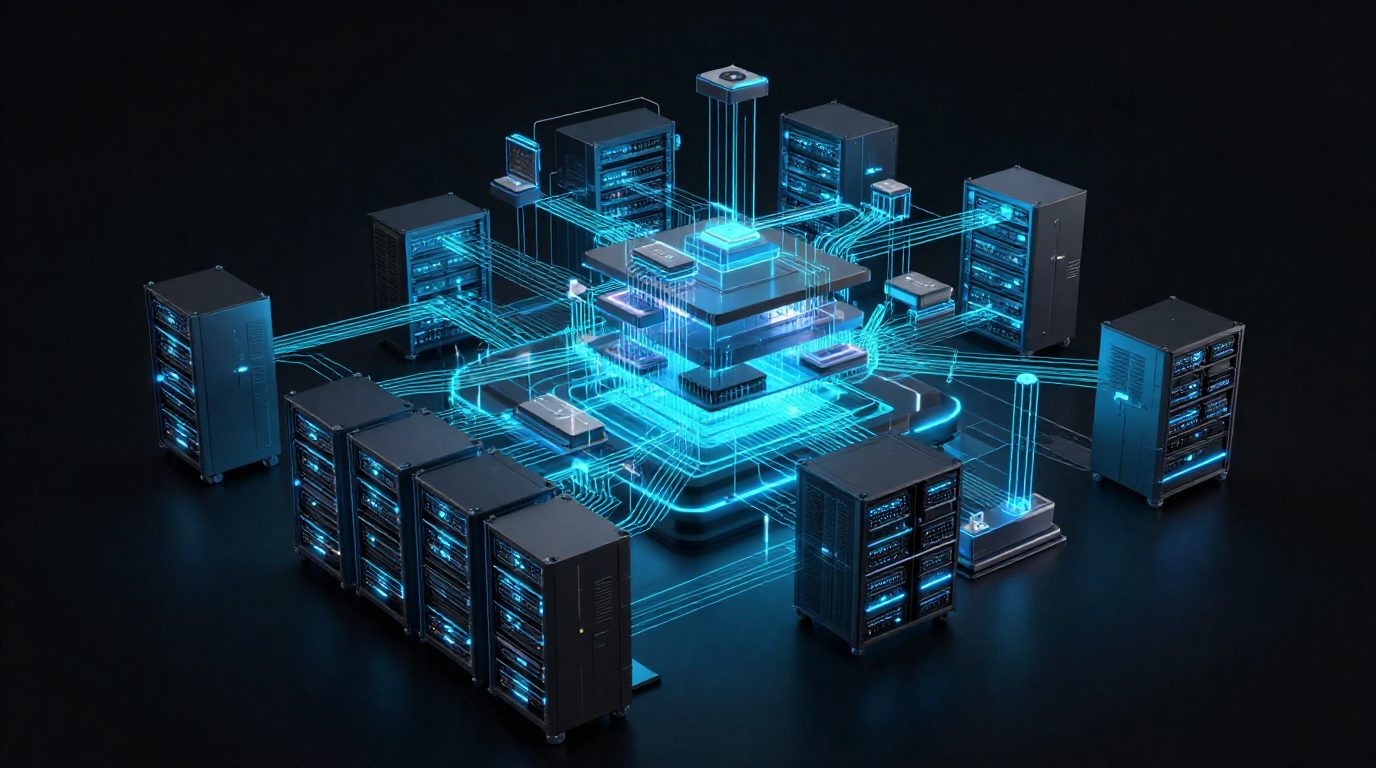
Core Architecture
1. Gateway Layer
Central routing, API access, and synchronized control of all requests.
2. Node Network
Distributed server units and edge devices processing data locally.
3. Module System
Extensible business logic (inventory management, machine control, time processes).
4. Identity Layer
Physical objects receive immutable digital identities.
Extensible Modules
System logic is driven by autonomous modules. From scheduling to inventory tracking and intelligent machine control.
View Module Portfolio →Application Areas
- Industrial Manufacturing
- Inventory & Logistics Systems
- Machine & Plant Control
- Development & Prototyping
- Digital Twins of Physical Objects
- Smart Infrastructure Systems
ðŸâ€Â Zero-Trust Security
- Every request is cryptographically verified
- Every node operates dynamically sandboxed
- All actions are immutably event-logged
- No implicit trust relationships in the network
🚀 Current Status
OCS Galaxy is currently in active development and testing. Initial modules and decentralized node structures are functional and are continuously expanded in our sandbox environments.
Request Early Access IntegrationHäufige Fragen – OCS Galaxy
Was ist OCS Galaxy?
OCS Galaxy ist ein verteiltes, eventbasiertes Betriebssystem, das physische und digitale Objekte in einem sicheren Identitäts- und Node-Netzwerk verbindet. Es basiert auf einer Zero-Trust-Architektur und erlaubt die dezentrale Steuerung von Maschinen, Sensoren und digitalen Prozessen.
Wie funktioniert das System?
Ein physisches Ereignis (z. B. ein Türscan per RFID) wird als Event an den
Gateway gesendet. Dieser leitet das Event an die Object Registry weiter,
die den Objektzustand aktualisiert. Der Executor führt dann die zugehörige Systemlogik
aus. Jede Anfrage ist kryptografisch signiert (→ System-Architektur).